
The StoryMaps in this collection have examined previously overlooked histories of science and exploration in Greenland. To reveal these stories, the Greenland Connection project’s researchers have used archives to study the events of the past. They have examined the archival collections held in the Royal Geographical Society (with IBG), the National Maritime Museum and Newcastle University’s Special Collections and Archives to learn more about the ‘hidden histories’ of the UK’s involvement in the exploration of Greenland. However, this has not always been an easy task.

The Power of the Archive
Archives are often described as ‘places of power.’ This means that certain people and certain perspectives are given priority in archival collections, while other people and perspectives are overlooked, downplayed or ignored.
The ‘power of the archive’ therefore has important consequences for studying histories of Arctic exploration. The archival collections that enable these histories to be written were usually created by people similar to the leaders of Arctic expeditions. They were often associated with influential organisations and were funded by wealthy people. Because of this, the archives themselves mirror the perspectives and priorities of those with power.
This means that those people who historically have not had the same levels of wealth and influence, for example women, working class people and Indigenous peoples, are often not as well represented in the archives containing the histories of Arctic exploration. It is therefore very difficult to investigate their roles in expeditions and understand their contributions to these exploratory histories.
Indigeneity in the Archive
The Indigenous Peoples of Greenlandic Exploration StoryMap has revealed the contributions made by both John Sakeouse and Kallihirua to the scientific exploration of Greenland. We have seen how these two figures supported the explorers during the expeditions, and the ways in which they shared their knowledge about the Arctic environment. However, because of the issues above, investigating these histories has not been straightforward.

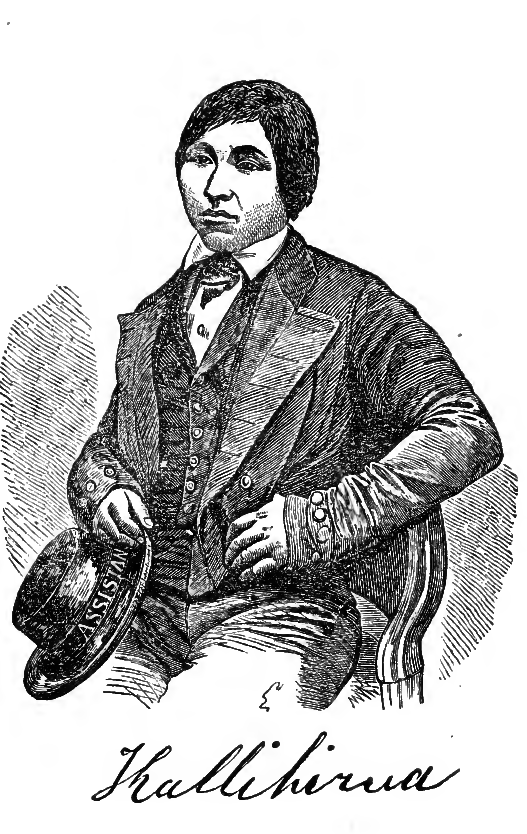
Firstly, Arctic explorers carefully managed their public image to represent themselves as brave and heroic. They were therefore often reluctant to describe in detail the support they had received from Indigenous peoples. If they revealed too much about the help offered to them by Inuit while on their expeditions, it could make audiences at home question how brave or heroic these explorers really were. The archival materials produced during these expeditions therefore rarely mention Indigenous peoples and focus exclusively on the explorer and their carefully curated Arctic experiences.
This was also the case with the knowledge shared by Indigenous peoples during expeditions. As well as showing themselves to be heroic, explorers also needed to present themselves as Arctic ‘experts’. If it became obvious that the knowledge they had gathered during their expeditions had in fact come from Indigenous ‘intermediaries’ then this could call into question whether they could really be considered experts at all. The scientific publications that explorers produced when returning from the Arctic therefore did not reveal that Inuit were in fact the true sources of much of this knowledge. Again, Inuit became marginalised in the historical record.
Finally, many explorers had problematic – often racist – opinions of Indigenous peoples around the world, including Inuit. They believed that Inuit were not as ‘developed’ as European peoples and used flawed scientific methods known as ‘racial science’ to try and prove these false beliefs. They also did not believe Inuit had the capabilities to effectively manage and govern the lands they were inhabiting and so believed these lands should be taken under colonial control. These troubling attitudes meant that many explorers simply did not consider Inuit lives to be as important as non-Inuit lives, and therefore did not feel that their histories should be recorded in archives.
The Ongoing Search for Archival Traces
For all these reasons, the researchers who worked on the Greenland Connection StoryMaps have relied on ‘archival traces.’ They have studied the archives of exploration closely for hints and clues that women, working-class people and Indigenous people were a part of these expeditions and have shown that they had vitally important roles to play. Relying on materials such as drawings, poems, maps and, in the Women in Greenlandic Expeditions StoryMap a pair of old boots, the project researchers have been able to piece together these marginalised people’s involvement in Arctic expeditionary histories.
Despite these efforts, the ongoing power of the archive means that there are many more ‘hidden histories’ of Arctic exploration that have not yet been told. In fact, it might be the case that some histories may never be told due to the fact that no archival traces remain. However, it is important that researchers keep studying the archives of exploration to identify and analyse these small archival traces so that more accurate and more representative histories of science and exploration in the Arctic regions can be written.
About the Author

My academic career began at the University of Glasgow, where I completed my undergraduate degree in Geography in 2014 and my Masters degree in Human Geography in 2015. I then moved to the University of Oxford to carry out my PhD research which involved collaborating with the Royal Geographical Society (with the Institute of British Geographers) to study the historical geographies of Arctic exploration at the end of the nineteenth century. I then joined the Scott Polar Research Institute at the University of Cambridge as a Postdoctoral Research Associate, before lecturing at the University of Glasgow. I am now delighted to be teaching and researching in Nottingham and contribute to various modules within the School of Geography.